


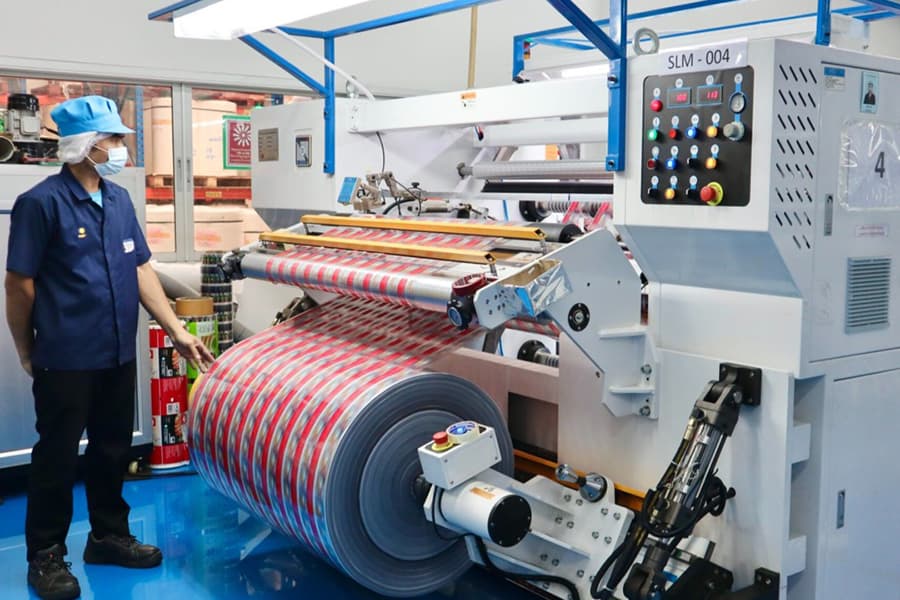
As Bangladesh prepares for LDC graduation and seeks to diversify its export basket, the packaging industry stands out as one of the most promising yet undervalued sectors of the economy.
According to insiders, some policy changes can help the sector fetch at least $24 billion annually from the global market provided that deemed-export status, tax reforms, ease of doing business, faster customs procedures, simplified duty drawback mechanisms etc are ensured.
Packaging has emerged as an essential component of modern manufacturing, trade, food safety, healthcare, branding and export competitiveness, they said.
Every day, millions of consumers use packaging products for toothpaste tube used in the morning, the biscuit packet opened at breakfast, the medicine blister pack, the shampoo sachet, the cooking oil pouch, and the packaging used for rice, flour, spices and countless consumer and other goods.
According to the Bangladesh Flexible Packaging Industry Association (BFPIA), the local market emerged as an $800 million in 2025, 80 per cent of which is met from the domestic market.
Data from the Export promotion Bureau (EPB) revealed that exports earnings from the sector stood at $422 million in FY 2025.
The story of Bangladesh's modern packaging industry began nearly five decades back in 1978 with Tampaco Group pioneered the country's first flexible foil packaging manufacturing operations.
What started as a niche manufacturing activity has gradually evolved into a sophisticated industrial ecosystem serving local companies, multinational corporations and export-oriented industries across the country, said Safius Sami Alamgir, President of the Bangladesh Flexible Packaging Industries Association (BFPIA) and Managing Director of Tampaco Group.
"Packaging serves as a critical backward linkage sector supporting garments, pharmaceuticals, food processing, agro-processing, consumer goods, electronics and numerous other industries. Every increase in manufacturing output inevitably creates additional demand for packaging solutions", he said.
Mr. Alamgir said packaging is one of the few sectors that simultaneously support industrialisation, consumer protection, food security, healthcare and exports.
As Bangladesh's manufacturing base expands, the importance of a strong domestic packaging industry will only continue to grow, he observed.
According to him, packaging acts as a strategic driver for economic growth with its pivotal roles in strong domestic demand, extensive backward and forward linkages, employment generation, technology transfer and significant export potential.
He said the sector's potential will require targeted policy support including ease of doing business, faster customs procedures and simplification of duty drawback mechanisms.
The sector needs recognition as a deemed export to attract both local and foreign investments, he added.
Mr. Alamgir said broader access to partial bond facilities for export-oriented manufacturers, tax rationalisation, and greater support for sustainable manufacturing initiatives would help boost shipment.
"Investors are looking for three things: ease of doing business, good governance and a business-friendly environment. If these fundamentals can be ensured, investment and exports will follow," he said.
Rezwan Ahmed, Managing Director of Mahtab Flexibale Printing Ltd, said the growing importance of the sector was reflected in the overwhelming response to the 1st International Dhaka Industrial Packaging Expo 2026, organised by BFPIA.
The three-day event brought together industry leaders, manufacturers, suppliers, multinational companies, policymakers and international stakeholders, highlighting the sector's increasing strategic significance, he said.
The event reinforced growing recognition of packaging as a strategic industry capable of attracting investment, generating employment and supporting Bangladesh's broader export ambitions, he mentioned.
Mr. Rzwan said the local packaging industry has grown into a multi-million sector employing 0.1 million workers directly and indirectly, thus supporting a much larger manufacturing ecosystem.
According to industry insiders, Akij Biax Films Limited has recently invested approximately Tk 10 billion in domestic production of packaging films that were previously imported, significantly strengthening local value addition and reducing import dependence.
Mr Ahmed said international companies such as Siegwerk from Germany and Sakata INX from Japan have also established manufacturing and supply operations in Bangladesh, which reflects growing confidence in the country's packaging sector and its long-term prospects.
Parvez Ahmed, Director of North Pack, said globally, the packaging sector has immense potential.
The industry is estimated to be worth approximately $ 1.28 trillion in 2025 and is projected to reach nearly $1.75 trillion by 2035.
He said the commerce minister recently told the local operators to set up a 2.0 per cent target of the global market.
"If necessary policy support is ensured, we would be able to fetch at least $24 billion annually from the export market," he said.
The government's recent decision to recognise "Paper and Packaging" as the Product of the Year 2026 has been welcomed across the industry as a significant policy signal, Mr. Parvez added.
tonmoy.wardad@gmail.com