


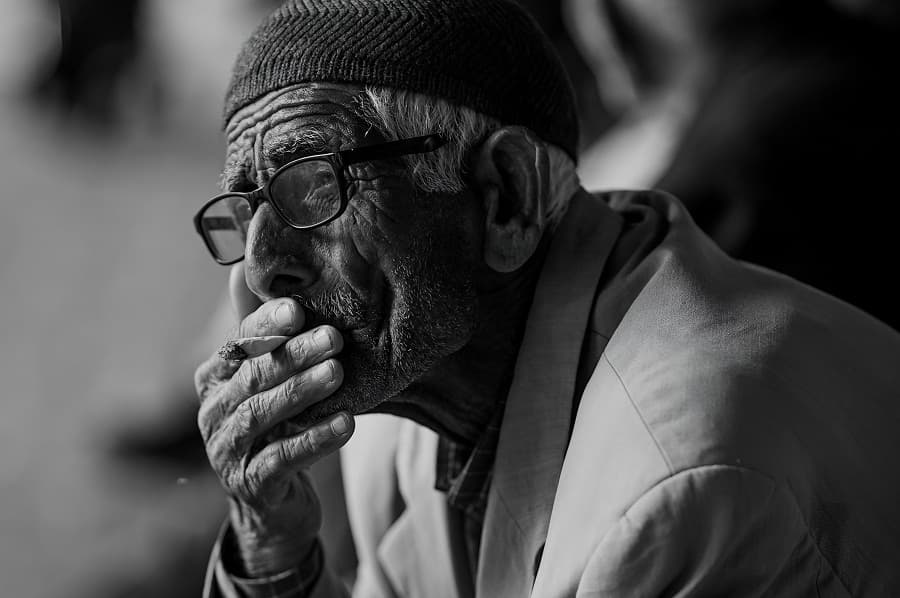
In the last episode of life, the most senior member of a family often becomes a ghost in their own home. Yet, the stable ground we stand on today was built entirely on the sweat, sacrifices, and unconditional love of these very people. Why, then, are they increasingly being pushed to the margins of our households?
As a nation, our GDP is steadily rising, and our standard of living is soaring. Why, then, do we abandon the very hands that once taught us how to take our first steps? Does this question ever haunt your conscience during quiet moments of reflection?
For decades, urban people have quietly harboured dreams of sending their children abroad for higher education. They willingly pour their life savings, comfort, and vitality into making this dream a reality.
The children, in turn, earn prestigious degrees, secure high-paying jobs, and eventually settle down overseas. This is no crime; they worked hard, followed the path their parents paved, and earned their success. Preoccupied with the desire to create a separate, isolated small family, many now see their elderly parents as an additional burden. Even when parents are kept under the same roof, they are often subjected to such profound emotional neglect and disrespect that they are forced to live like living corpses.
The root cause lies deep within our present social structures and parenting systems. From forbidding them to share their school tiffins to isolating them from extended relatives, children are conditioned from infancy to grow up in isolated cocoons.
When this hyper-competitive, self-absorbed mindset becomes ingrained in a child's character as their fundamental childhood education, it is bound to act as a catastrophic boomerang against the parents themselves in their twilight years.
We recently witnessed a heartbreaking manifestation of this societal malaise in the capital's Pallabi area. A mother passed away entirely alone in her flat. It was only days later, when the stench of her decomposing body spread through the building, that neighbours alerted the authorities. Shockingly, it later emerged that her children were highly successful and well-placed in society.
This tragedy proves several myths. It disproves the notion that parents only end up lonely if their children go abroad; conversely, it exposes the falsehood that children staying in the country automatically fulfil their filial duties.
We often assume that poverty or financial strain drives people to abandon the elderly. The Pallabi incident proved that this crisis is not financial; it is a symptom of deep-seated psychological, moral, and cultural decay.
Is there no permanent way out of this? Shall we merely react with outrage on social media after every such tragedy, engage in temporary participation of 'views' and 'clicks,' and then forget it when the next news cycle hits? No, if we want a healthy society, the correction must begin at the absolute roots.
From the very beginning, children should be taught the habit of being with everyone and practising patience. Even if you are a working person yourself, you should take your children on a large family trip twice a year and explain the joys and benefits of being together, grounded in reality.
Refrain from being harsh in front of children, housemaids, or subordinates, show respect to your partner, and above all, avoid lying or depriving people by tricking them.
Raising children is a parental duty. But we must stop considering it as an investment. Along with their necessary expenses, it is very important to save as much as possible for their own future. We must make our children understand that creating demand in line with our ability is a skill.
We must avoid unhealthy competition ourselves. Children are imitators. Respect and take care of the elderly members of the family. Your children will learn from you.
Do not give your child anything beyond their means, through loans or in immoral ways. Explain your limitations to them with grace and clarity.
Apart from learning, pay attention to whether they are acquiring humanity. Do not boast about them to people, and do not teach them arrogance either. Remember, your education will come back to you.
Remember, you are their ultimate emotional sanctuary. Similarly, if a child veers into unlawful or unethical activities, never cover it up to allow a minor misdemeanour to grow into a massive monster. Seek professional help if necessary, because a criminal is ultimately dangerous to both the family and the state.
We must first ask ourselves a fundamental question: do we want to be an ATM booth or dignified, grounded human beings?
Our minor acts of kindness and social empathy will make us respectable in our children's eyes, and they will naturally follow suit.
New generations must realise that breaking a home for fleeting ego offers no true happiness; instead, it merely sows the seeds of a deeply lonely and terrifying future.
Regardless of income brackets, ensure a sound retirement plan. Cultivate relationships rather than walls. Give your children love, warmth, and a secure harbour, but do not turn yourself into an emotional or financial liability upon them.
After the Pallavi incident, many facts have come to light. Among them, I would like to mention one significant fact here. There is a law providing for maintenance to parents, and there is also a system of penalties for non-payment. It is a very commendable initiative. This is the quality of a modern state. Moreover, the community will provide financial, psychological, and legal support, and we hope that it will be uninterrupted.
But above all, one thing, the elevation of the soul is not achieved by making laws. Let the goal be to become a master, but also a shadow of the trust of the novice. Let our family stories move forward, not tied to the bond of debt to anyone, but rather bound by the bond of respect and love.
afrina.biz1823@gmail.com