

Corruption and bribery in Bangladesh's public service sectors worsened over the past year, with households paying an estimated Tk 126.33 billion in bribes despite a decline in the average amount paid per household, according to a survey by Transparency International Bangladesh (TIB).
The anti-corruption watchdog said the average bribe paid per household fell by 9.8 per cent to Tk 5,124 between November 2024 and October 2025, compared with the previous survey conducted in 2023.
However, the overall volume of bribes rose by 15.9 per cent to Tk 126.33 billion, indicating that a larger number of households were affected by corruption.
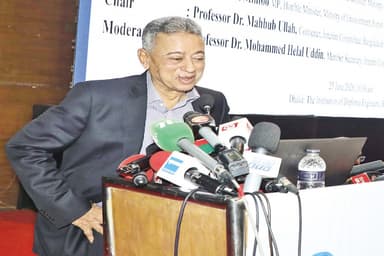
The findings were unveiled on Thursday at TIB's Dhanmondi office in the capital through its "Corruption in Service Sectors: National Household Survey 2025", which assessed corruption trends during the tenure of the interim government.
Using the Bangladesh Bureau of Statistics (BBS) sampling framework, TIB selected 1,149 rural and urban clusters across all eight divisions through a two-stage random sampling process.
The survey covered 18 public service sectors and followed a similar study conducted in 2023.
According to the report, the proportion of households experiencing corruption increased by 15.1 per cent from 2023, while the share of households paying bribes rose by 25.2 per cent.
Passport services remained the most corruption-prone sector, with 76.6 per cent of service recipients reporting that they had paid bribes. The rate was higher in rural areas (79.1 per cent) than in urban areas (71.8 per cent).
The Bangladesh Road Transport Authority (BRTA) ranked second, with 63.5 per cent of service recipients reporting bribery.
Law enforcement agencies and agricultural services each recorded a bribery rate of 49.3 per cent, followed by land-related services at 47.6 per cent.
TIB said households paid the highest average bribes in judicial services, banking and land administration.
Overall, 54.3 per cent of service recipients reported experiencing at least one form of corruption, while 33.2 per cent said they had paid bribes to obtain services.
The report estimated that the total amount of bribes paid nationwide in 2025 was equivalent to about 1.58 per cent of the revised national budget for FY2024-25. TIB expressed concern that corruption remains deeply entrenched in law enforcement agencies and the judiciary, undermining citizens' access to justice.
It also found that corruption and bribery had either increased or remained persistently high in agriculture, local government institutions, land administration, education, health, passport services and BRTA operations.
The survey found that 81.5 per cent of households believed obtaining public services without paying bribes was difficult.
Respondents cited impunity, lack of public awareness and a culture of rewarding rather than punishing corrupt individuals as the main drivers of corruption.
The survey also revealed a marked rural-urban disparity. About 66 per cent of rural households reported paying bribes, compared with 58.5 per cent of urban households. However, urban households paid larger amounts on average.
Lower-income households bore a disproportionate burden, spending a greater share of their annual income on bribes than wealthier families. Women, Indigenous people and persons with disabilities also faced greater obstacles in accessing public services.
Despite widespread experiences of corruption, 61.3 per cent of affected households did not lodge complaints, mainly because they believed the entire service delivery system was corrupt.
Nearly half of all households said they did not know where or how to report corruption.
While 29.5 per cent of households were aware of the Anti-Corruption Commission (ACC), only 1.4 per cent knew about the government's Grievance Redress System (GRS).
TIB noted that complaint rates remained extremely low and that many complaints were either not accepted or failed to lead to any action.
The survey also found that the expansion of digital services has done little to curb corruption.
Many service seekers continue to rely on brokers and intermediaries, creating opportunities for bribery and other irregularities even in sectors where online services have been introduced.
bdsmile@gmail.com