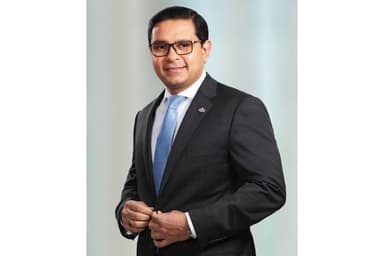



International Chamber of Commerce (ICC) Bangladesh President Mahbubur Rahman on Thursday called for bold structural reforms, stronger public-private collaboration and accelerated investment in infrastructure to help Bangladesh navigate mounting global uncertainties and prepare for its post-Least Developed Country (LDC) era.

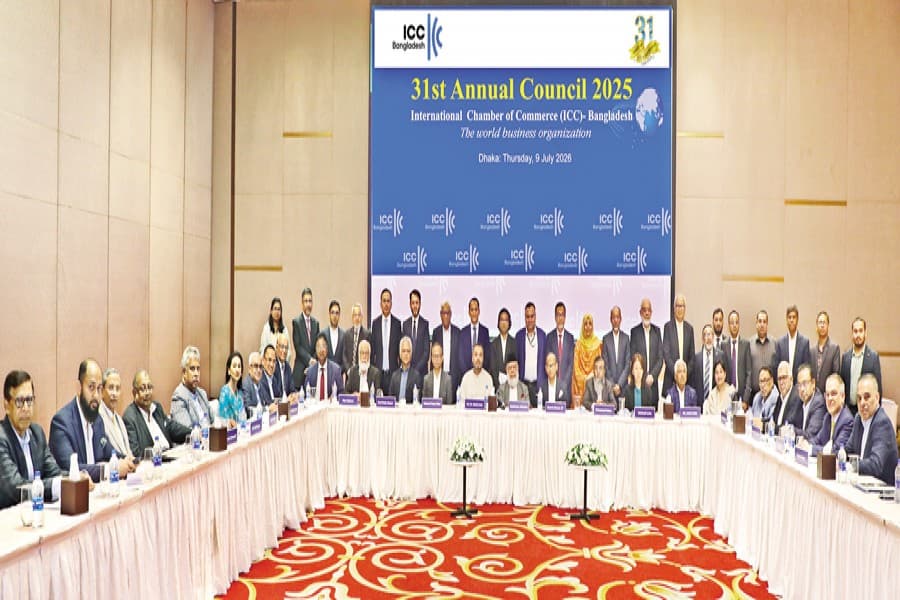
Addressing the 31st Annual Council of ICC Bangladesh at Hotel Sheraton Dhaka, Mahbubur Rahman said the country stood at a defining moment in its economic journey as geopolitical tensions, supply chain disruptions and domestic structural weaknesses continued to weigh on growth.
He warned that conflicts in Ukraine, Gaza and the Middle East, along with disruptions in the Red Sea and the Strait of Hormuz, had heightened global economic uncertainty, pushing up energy prices, freight costs and inflation. For an import-dependent economy like Bangladesh, these developments pose significant risks to trade, energy security and macroeconomic stability, he said.
Referring to projections by the International Monetary Fund (IMF) and the World Trade Organization (WTO), he noted that slowing global growth and rising protectionism underscored the need for Bangladesh to strengthen its competitiveness, diversify export markets and build greater economic resilience.
Mahbubur Rahman said Bangladesh had made remarkable progress over the past five decades and was now approaching another historic milestone with its graduation from the LDC category. However, he cautioned that the transition would require stronger institutions, improved competitiveness and sustained economic reforms.
He noted that economic growth had slowed to around 3.7 per cent in 2025 due to global uncertainty, energy shortages, subdued private investment and macroeconomic pressures. Despite these challenges, record remittance inflows of US$32.8 billion and steady export earnings had helped support the economy.
The ICC president identified controlling inflation and restoring private-sector confidence as the country's immediate priorities. He also stressed the need to strengthen the banking sector by addressing high non-performing loans, governance shortcomings and capital adequacy concerns.
Ensuring long-term energy security through diversification and greater efficiency, he said, would be critical for sustaining industrial expansion and export competitiveness.
As Bangladesh prepares for LDC graduation, Mahbubur Rahman called for stronger domestic revenue mobilisation, prudent debt management and timely conclusion of Economic Partnership Agreements (EPAs) and Free Trade Agreements (FTAs) to offset the gradual loss of preferential market access and concessional financing.
He also urged the government to create a more predictable and business-friendly investment climate to attract investment, generate employment and diversify exports.
Highlighting infrastructure as a key driver of competitiveness, Mahbubur Rahman proposed the construction of a modern elevated expressway between Dhaka and Chattogram, saying the project would significantly improve logistics efficiency, reduce transport costs, enhance export competitiveness and strengthen regional connectivity.
He also invited the Asian Development Bank (ADB) to support the project through financing and technical assistance.
"With bold reforms, sound macroeconomic management and stronger collaboration between the government and the private sector, Bangladesh can transform today's challenges into tomorrow's opportunities and emerge as a more competitive and prosperous economy," he said.
Speaking at the event, Prime Minister's Adviser Dr Mahadi Amin said Bangladesh's future economic growth must be led by the private sector, with the government focusing on creating a supportive policy environment.
He said the government's role is to formulate policies that encourage investment, generate employment and improve the business climate, while the private sector should remain the main driver of development.
"We want to move forward as a private sector-led country in terms of development and growth," he said, praising the sector's resilience and contribution to the economy.
Dr Amin said the government is pursuing deregulation and economic liberalisation to lower the cost of doing business, reduce rent-seeking and improve the ease of doing business. He added that an advanced policy framework is being prepared to make Bangladesh a more attractive investment destination.
Outlining the trade strategy, he said taxes on raw materials would be reduced to support local industries, while imports would become costlier in sectors where sufficient domestic production exists, aiming to strengthen self-sufficiency and lower the prices of essential commodities.
As the administration approaches its 180-day mark, Dr Amin stressed stronger public-private collaboration, saying the government would hold consultations with business associations to identify reforms and improve the investment climate.
Joining virtually, Dr. Rubana Huq, Managing Director of Mohammadi Limited, presented a keynote paper with a proposal on setting up a new platform.
She said a new public-private policy platform could be set up aimed at strengthening the country's preparedness for graduation from the Least Developed Country (LDC) category and enhancing export competitiveness.
Presenting the proposal, the speaker suggested creating the Industry, Academia, Competitiveness and Policy Partnership (ICAP) under the auspices of ICC Bangladesh.
The initiative would bring together industry leaders, academics, researchers, policymakers and trade bodies to support evidence-based policymaking and improve coordination between the public and private sectors.
The proposed platform would focus on Bangladesh's LDC graduation readiness, export diversification, competitiveness and the development of the man-made fibre (MMF) sector. It also aims to help the country prepare for future Free Trade Agreements (FTAs), noting that the European Union has shown interest in pursuing an FTA with Bangladesh.
Under the proposal, ICC Bangladesh would provide strategic oversight and lead engagement with the government, while the Research and Policy Integration for Development (RAPID) would serve as the principal research partner, undertaking policy analysis, benchmarking competitor countries, preparing policy briefs and monitoring reform progress.
The proposal also recommended establishing an Industrial Advisory Council comprising representatives from export industries, logistics, finance and trade bodies to identify priorities and guide policy recommendations.
Among the proposed outputs are quarterly policy briefs, an annual competitiveness review, an LDC readiness scorecard, an MMF transformation roadmap, FTA policy papers and export diversification strategies. The estimated budget for the initiative is Tk 5 million over two years.
The Council Meeting was attended by, among other, ICCB Executive Board Members Kutubuddin Ahmed, Anwar-ul-Alam Chowdhury (Parvez), Mir Nasir Hossain, Sayeed Ahmed, Mahmud Hasan Khan, Mohammed Hatem, Syed Nasim Manzur, Simeen Rahman & Md. Fazlul Hoque; Takahashi Junk, Chief Representative, JICA Bangladesh Office; Eric Geelan, Political and Economic Counselor, Embassy of the United States of America to Bangladesh; ICCB Members Rizwan-Ur Rahman, Managing Director & CEO, ETBL Securities & Exchange Ltd.; Mohammad Zahir Hussain, Administrator, Islami Bank PLC; Md. Altaf Hossain, Managing Director of Islami Bank, Osman Ershad Faiz, Managing Director, Dhaka Bank PLC; Hassan O. Rashid, Managing Director and CEO, Eastern Bank PLC; Muhit Rahman, Managing Director, One Bank PLC; Mosleh Uddin Ahmed, Managing Director, Shahjalal Islami Bank PLC; Mohammad Shamsul Islam, Managing Director, National Housing Finance PLC; Abdullah Al Noman, Managing Director & Chief Executive, Lawyers For Energy Environment and Development (LEED) Limited; Margub Kabir, Barrister-at-Law, Margub Kabir & Associates; Mohammed Furrukh Rahman, Head of Chambers, Rahman's Chambers; Mohammed Abdul Jabbar, Managing Director, DBL Ceramics Ltd.; AKM Kamrul Islam ,FCA, Senior Partner, Islam Aftab Kamrul & CO.; Mr. Mohd. Arshad Ali, Managing Director, The Merchants Limited; Mohammad Samsul Alam Mallick, Managing Director, New Zealand Dairy Products Bangladesh Limited; Md. Maroof ur Rahman Mazumder, Managing Director, Saudi-Bangladesh Industrial & Agricultural Investment Company Ltd. (SABINCO); Parveen Mahmud, Chairman, Shasha Denims PLC; Syed Ali Jowher Rizvi, Managing Director, Summit Alliance Port Limited; Matiur Rahman, Chairman & Managing Director, Uttara Motors Limited; S M Moinul Islam, Managing Director, Tyser Risk Management Bangladesh Limited (TRMBL); Md. Jashim Uddin, Chairman, Bengal Commercial Bank PLC.; Razeev H Chowdhury, Acting President, DCCI; Osama Taseer, former President, DCCI; Mohammed Salim, Chief Executive Officer, Eastland Insurance PLC; Hasan Tarek, Chief Executive Officer, Eastern Insurance Company PLC; Enamul Haque, Interim Chief Executive Officer, Standard Chartered Bank; ICC Bangladesh Banking Commission Chairman Muhammad A. (Rumee) Ali, ICCB Secretary General Ataur Rahman & K A M Majedur Rahman, Chief Executive Officer, Bangladesh International Arbitration Centre (BIAC).
bdsmile@gmail.com