



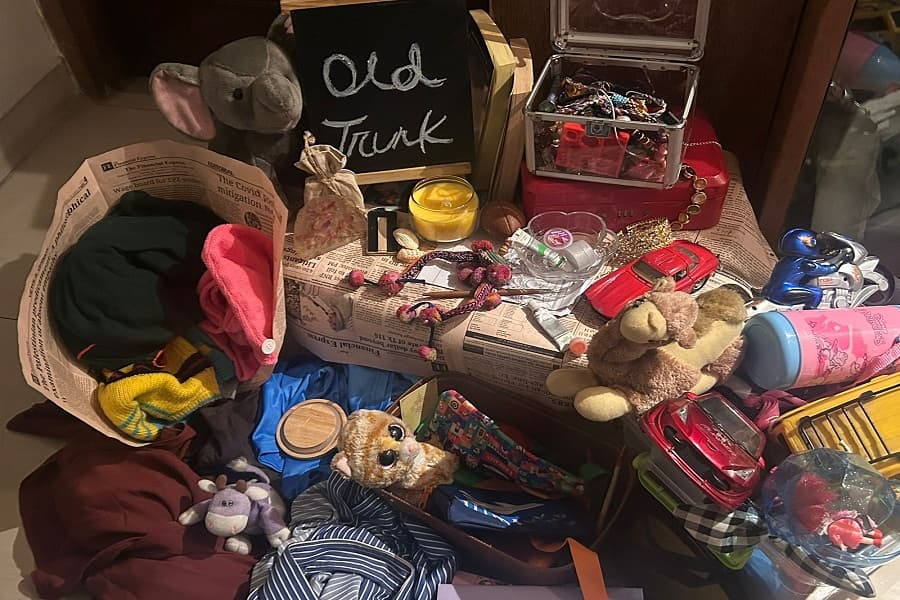
Thrifting is currently quite popular, especially among the youth of our country. It has transformed into a dedicated online space of its own. Today, there are several thrift stores with many pages and stores hosting physical yard sales regularly.
For this article, we sat with Rumaisa Quayum, owner of Old Trunk Dhaka (@oldtrunkdhaka), to understand what makes these products thrift-worthy.
While thrifting generally refers to selling used or barely used items or factory rejects, let's look into how the products are collected, priced, and resold. It will give us an idea of how to sustain things longer and pass it along to the next.
How are thrift products collected?
Thrift stores in our country are mainly segregated into the clothing section, even though they also sell many other products. When Rumaisa Quayum started her page, Old Trunk Dhaka, it comprised family heirlooms, jewellery, shoes, antique items, clothes, books, etc. She collected these items from her band of loyal customers and sold them at a very reasonable price.
The idea of thrift stores is reselling items at a fraction of the cost even though the products are in excellent condition. Some of them collaborate with businesses and sell the extra products with or without minor defects, which otherwise would end up as waste materials.
Rumaisa says, "A few of my loyal customers reached out with brand deals. They were people affiliated with businesses, and they wanted to send in the extras or rejects in the factories so we could sell them."
This method enabled an efficient recycling ecosystem that contributed to the environment.
In our country, we are familiar with hawkers who take on old books, papers, and other stuff free of charge or sometimes a little charge. Rumaisa took on these items from the hawkers, repurposed them, and sold them on her page. She adds, "I was shocked to see the number of good items that people just threw away."
These items included books, jewellery boxes, and antiques, which could be recycled with a little restoration and cleaning. With this, Rumaisa started posting videos of the restoration process of different items on her page to educate people on how to upcycle and refurnish items instead of throwing them.
How are these products priced?
The prices are based on their usage, present condition, and the restoration process. Thrift stores often come with the aim of recycling and upcycling. So, the products are chosen based on their use in practical life. Rumaisa ensures her prices are below Tk 500, although, at times, they do fluctuate.
The market for thrift products
Younger generations are more invested in thrift stores as they are affordable and unique. There is usually one item of a certain design available. Moreover, the younger generation has a more positive mindset towards secondhand shopping.
Thrift shop owners often face challenges when it comes to pricing. Rumaisa says, "What people don't understand is that pricing also comprises the restoration and other processes that go alone in making the items thrift-worthy." Still, a section of the buyers remains sceptical about the pricing.
Thrift stores are doing very well in our country as consumers are more open-minded. Thrift stores have a positive future as more people correlate sustainability and fashion.
faijatasfia@gmail.com