


A National Economic Mission is a coordinated strategy that aligns diplomacy, investment, finance, industry and implementation around clearly defined national economic objectives.
The Prime Minister Tarique Rahman deserves congratulations for choosing Malaysia and China for his first major overseas engagements and for using these visits to strengthen Bangladesh's international engagement, economic diplomacy and development partnerships. At a time of geopolitical uncertainty and economic realignment, sustained dialogue with global leaders, investors and development partners is more important than ever.
Bangladesh needs to fundamentally rethink how it approaches global economic forums. Every high-level international visit should be viewed not merely as a diplomatic engagement, but as a strategic opportunity to advance the country's long-term economic transformation.
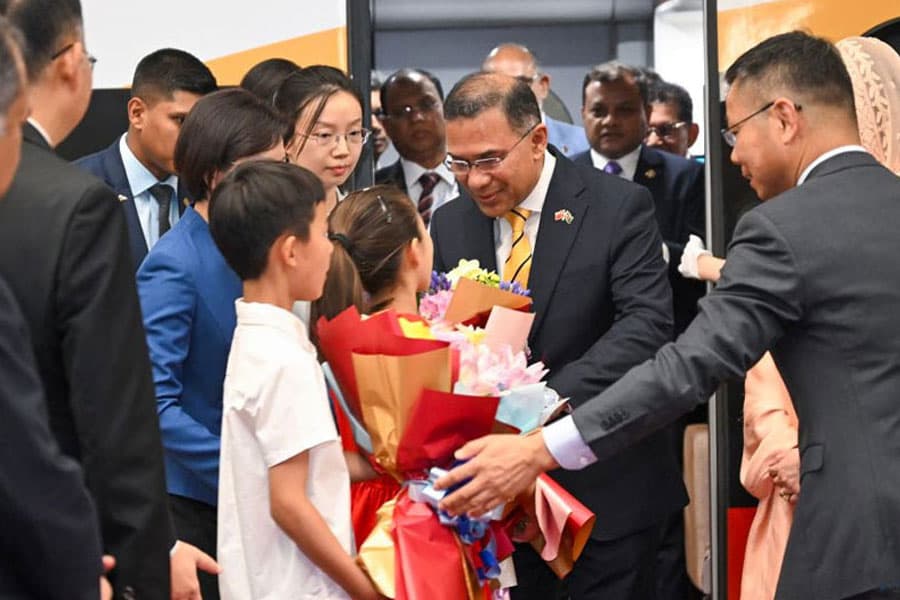
The World Economic Forum's Annual Meeting of the New Champions in Dalian, known as Summer Davos, offered Bangladesh such an opportunity. According to media reports, the Prime Minister highlighted climate action, renewable energy, international cooperation and sustainable development-priorities that deserve recognition. Yet the real measure of success at Summer Davos extends beyond speeches. The central question is whether Bangladesh arrived with a clearly defined national economic mission capable of translating international engagement into investment, technology and long-term partnerships.
Although "Davos" is widely recognised, its strategic significance is often misunderstood. It is not simply another international conference. It is one of the world's foremost platforms where governments, multinational corporations, sovereign wealth funds, technology companies and financial institutions shape future investment decisions and long-term partnerships. For Bangladesh, participation therefore represents far more than international visibility; it is an opportunity to position the country within the next generation of global production, investment and innovation networks.
The challenge is not whether Bangladesh should attend such forums. Participation is essential. The real challenge is preparation. Successful economies arrive with a clear national strategy, investment-ready projects, identified partners and measurable objectives. They use these gatherings not merely to explain their ambitions but to negotiate investments, build partnerships and secure long-term commitments.
Bangladesh should institutionalise a similar approach. Rather than attending future global forums primarily with speeches and protocol engagements, it should arrive with a National Economic Mission supported by bankable projects, coordinated implementation plans and clearly defined national priorities. The objective should be to demonstrate-not simply describe-Bangladesh's economic potential.
That mission should be anchored in Bangladesh 2035: A National Economic Mission, a long-term transformation agenda positioning Bangladesh as a competitive manufacturing, logistics and value-addition hub. Manufacturing, renewable energy, regional connectivity, coastal Special Economic Zones, advanced agro-processing, electric mobility and technology-driven industries should form the core of an integrated national investment portfolio capable of attracting global investors and strategic partners.
Equally important is the composition of Bangladesh's delegation. Economic diplomacy today requires multidisciplinary teams capable of promoting, negotiating and implementing complex investment partnerships. Beyond political leadership, Bangladesh should field representatives from government, finance, industry, corporate finance, commercial law and the private sector with both the expertise and authority to convert dialogue into investment.
One initiative could fundamentally reshape Bangladesh's economic diplomacy: the establishment of a Bangladesh Global CEO Strategic Roundtable hosted by the Prime Minister's Office during the World Economic Forum. Bringing together carefully selected global CEOs, sovereign wealth funds, institutional investors and technology leaders, the Roundtable should focus on investment opportunities, policy reforms and long-term industrial partnerships.
Its most important outcome may be be the creation of a permanent Bangladesh Global CEO Forum-an institutional platform for continuous dialogue, investment facilitation and strategic partnership between Bangladesh and global business leaders. Rather than relying on periodic overseas visits, Bangladesh would establish a durable mechanism for maintaining strategic engagement with the world's leading investors and corporate decision-makers.
Media reports indicate that the President of the World Economic Forum has invited the Prime Minister to attend the next Annual Meeting in Davos, Switzerland. This should be viewed not simply as another invitation but as another opportunity to apply the lessons learned from Dalian. Bangladesh needs to attend Davos with a National Economic Mission, bankable projects, targeted engagement with global business leaders and measurable national objectives.
Every major international engagement should ultimately be judged by four questions: Was the Mission clear? Was productive Capital attracted? Did it strengthen Manufacturing? And how will success be Measured?
Bangladesh should no longer go to global economic forums simply to explain its potential. It should go to demonstrate -with national economic mission, bankable projects, credible partners and the institutional capacity to convert international engagement into lasting national prosperity. Bangladesh should attend global economic forums with investment-ready projects, not speeches alone. In global economic diplomacy, opportunities matter; preparation determines outcomes.
Maj (Retd) Mohd Akhtaruzzaman is a former Member of Parliament and an independent policy commentator on economic diplomacy, strategic development and public policy.
rtlbddhaka@yahoo.com