


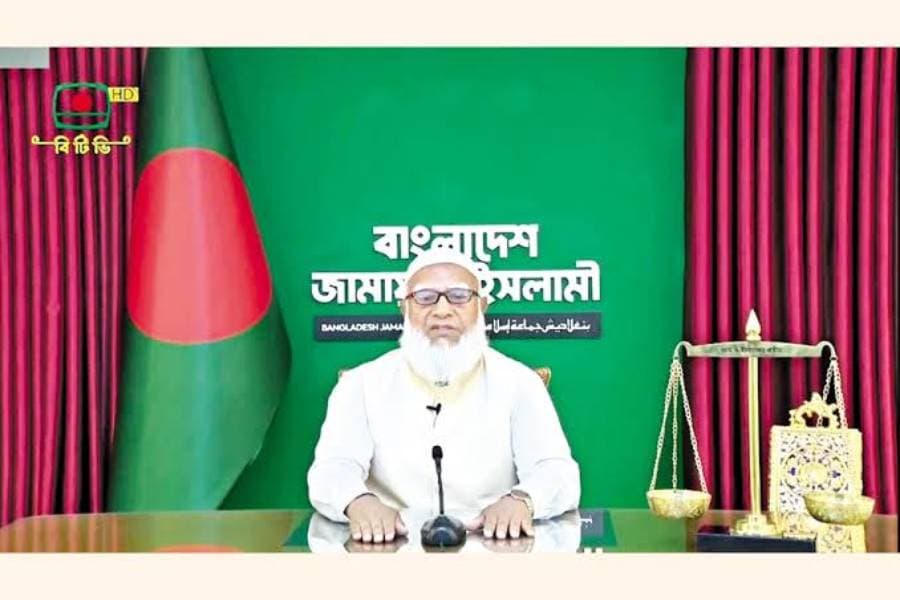
Leader of the Opposition and Ameer of Jamaat-e-Islami, Dr. Shafiqur Rahman, on Wednesday alleged that the government has failed to implement the constitutional reform mandate endorsed by the people through a referendum, despite a Reform Charter agreed upon by political parties under the National Consensus Commission.
He said that if Parliament does not provide an opportunity for comprehensive constitutional reform, the opposition will take the issue directly to the people and continue its movement to implement the public mandate.
Speaking at a press briefing at the LD Hall of the Jatiya Sangsad on Wednesday afternoon, Dr. Shafiqur said that following the political change of 2024, the government formed the National Consensus Commission. After extensive discussions, 31 political organizations reached an agreement on a Reform Charter. According to him, all parties except the Communist Party of Bangladesh (CPB) signed the charter.
He said there had been a political consensus to hold the national election and the referendum on the same day, with all parties committing to accept the outcome of the referendum. Based on the referendum results, a Reform Council was to be established. Members of Parliament were also expected to take an oath as members of the Reform Council in addition to their oath as lawmakers.
The opposition leader claimed that while opposition MPs took both oaths, members of the ruling party took only the oath of office as Members of Parliament and declined to be sworn in as members of the Reform Council, arguing that such a provision does not exist in the Constitution.
Rejecting that justification, Dr. Shafiqur said many significant political arrangements in Bangladesh had previously been implemented despite not being explicitly provided for in the Constitution. He cited the formation of the interim government led by Professor Muhammad Yunus, as well as the country’s first, second, and third national referendums, saying all were carried out in response to national necessity.
He further claimed that approximately 68.6 percent of voters supported constitutional reform in the referendum. Ignoring that verdict, he said, has created a new political crisis.
Dr. Shafiqur said the matter was raised in Parliament but was not given the opportunity for meaningful debate. Although the issue was later discussed following a formal notice, no decision or ruling was delivered. “If we are denied the opportunity in Parliament, we will go to the Parliament of the people,” he said. “We will not retreat from the promise we made to the people. Our movement will continue based on the people’s demands.”
Criticizing the government’s initiative to establish a Constitutional Amendment Commission, he argued that the people had voted for constitutional reform, not merely constitutional amendments. He said there is a fundamental difference between the two, explaining that constitutional amendments are subject to judicial review, whereas reforms carried out on the basis of a direct public mandate are not.
Referring to the abolition of the caretaker government system and the decentralization of High Court benches, he noted that several constitutional amendments had previously been struck down by court rulings.
Dr. Shafiqur said his party does not want laws enacted to protect the interests of any political party. “We want legislation that places the interests of the people above all else,” he said. “The reforms necessary to restore a healthy democratic order must be implemented. Otherwise, the country will continue to lose its way.”
He added that the opposition’s movement for constitutional reform will continue and that, over time, other public demands will also be incorporated into its programmes.