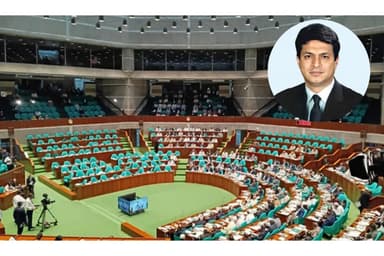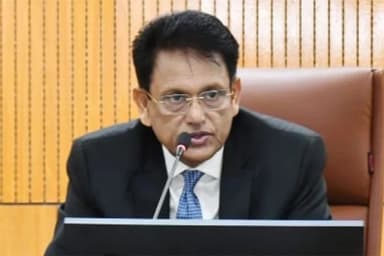


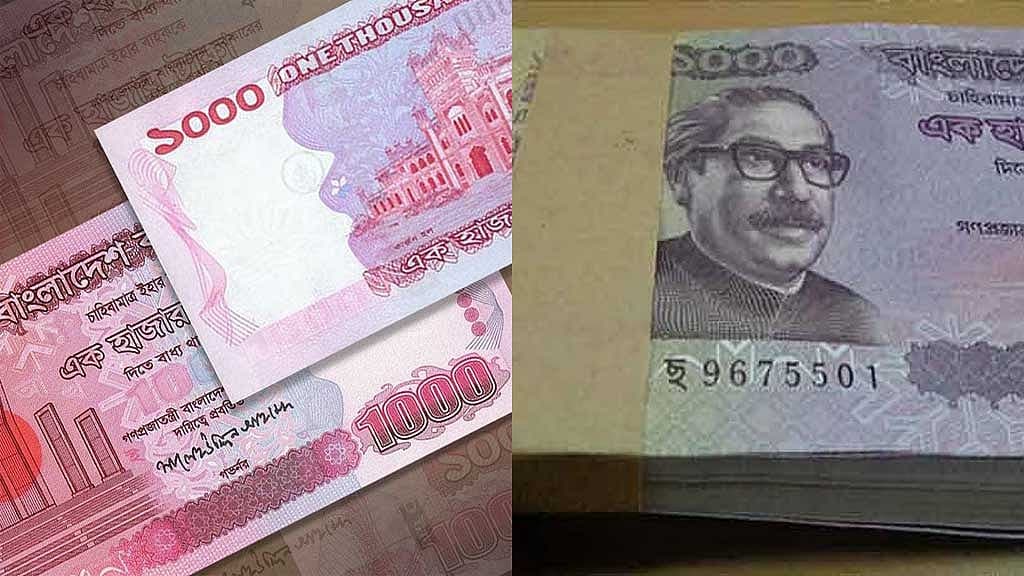
BNP lawmaker AM Mahbub Uddin Khokon has proposed scrapping Tk 500 and Tk 1,000 banknotes, arguing that large amounts of cash are being kept in homes because people have lost confidence in banks.
The Noakhali-1 MP said people should be given two months to deposit the notes in banks and legalise undeclared money, a move he believes would increase liquidity in the banking sector and help reduce the budget deficit.
He made the proposal on Sunday while taking part in the general discussion on the proposed 2026-27 national budget in parliament.
Khokon said the country's banking sector had been badly damaged.
"Banks have been looted. Why does Bangladesh need so many banks? We don't need so many banks. Every MP wants a bank. Every political leader wants a leasing company."
Calling for a reduction in the number of banks, he said: "The number of banks has to be reduced. We don't need so many banks. Public money is used to fill the deficits of banks."
As a way of bringing cash back into the banking system, the BNP MP proposed withdrawing high-denomination notes from circulation.
"Cash is sitting in homes. Those linked to the former authoritarian regime left after storing cash at home. There is money in households, but people do not keep it in banks."
He suggested banning Tk 500 and Tk 1,000 notes and allowing people two months to deposit them.
"Let people legalise the money. If it is not declared in their tax files, they can legalise it by paying a fee of 20 or 25 percent."
Khokon claimed the measure would help bridge the budget deficit.
"The budget deficit will be fully covered. Tk 200 billion to Tk 250 billion... all the banknote money will become legal and be reinvested. That means the wheels of the economy will start turning."
He also identified money laundering as one of the country's biggest economic challenges, saying successive governments had pledged to recover laundered funds but had failed.
"Since independence, everyone has talked about recovering laundered money and even published white papers. Not a single taka has been brought back. There is no real opportunity to recover it because the money becomes part of another system."
Explaining why capital leaves the country, Khokon said: "Money has its own character. Money will move where money is safe. In that way, money can make more money."
He urged the government to create a system in which people would feel secure keeping their wealth in Bangladesh.
"Doesn't Singapore have laws? Yet money goes there. Doesn't Dubai have laws? Canada? Thailand? They all have laws. So why don't we change the system? Let's change the system."
He said Bangladesh should establish a financial environment where people feel confident keeping money in the country and are encouraged to bring funds back from abroad.
Khokon also described law and order and unemployment as major challenges to implementing the proposed budget.
"We cannot expect an improvement in law and order while leaving millions of young people unemployed. We must create jobs for them."
Although he described the proposed budget as a deficit budget, he said this was not unusual.
He noted that many countries operate with budget deficits and that Bangladesh's own records show deficit budgets have been common.
Khokon added that the budget had been prepared within just three months under the leadership of the prime minister and finance minister despite what he described as a "devastating economic situation".
"This budget has been presented while rescuing the country from a looted economy. That is why we are not seeing major criticism of it."