




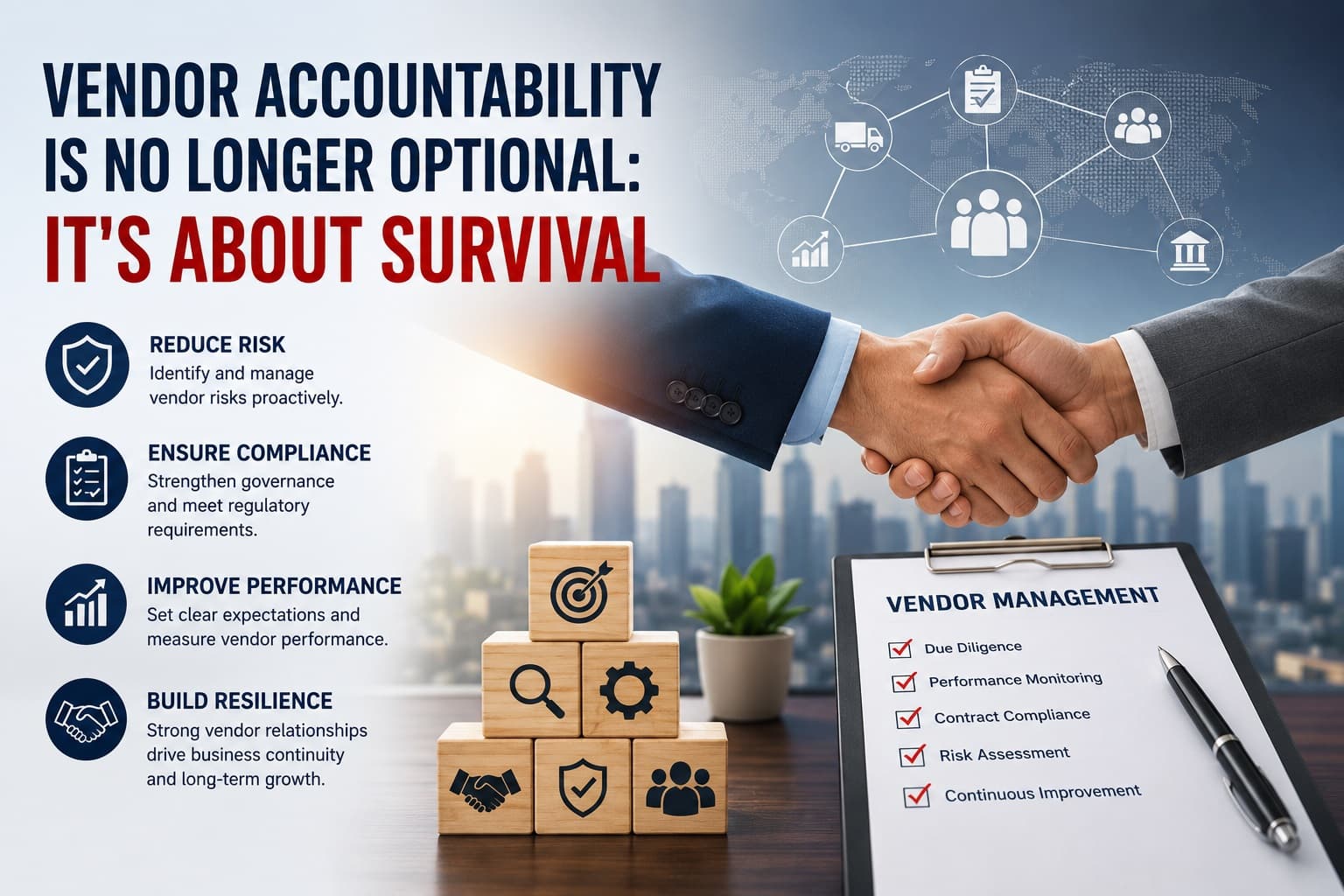
There was a time when organisations were defined by what they owned: factories, assets and infrastructure. That is no longer the case. Today, organisations are increasingly defined by the partners they rely on. From procurement and logistics to compliance, travel and marketing, third-party vendors have become deeply integrated into day-to-day operations. As that dependence grows, so does the risk. Many business disruptions no longer originate within organisations; they begin with vendors. Research suggests that organisations now depend on an average of 10 or more third-party vendors, significantly increasing their exposure to operational and financial risks.
In fast-growing economies, particularly across South Asia, vendor relationships are often built on trust, flexibility and speed. Credit facilities, informal agreements and rapid onboarding can help businesses move quickly. However, what begins as a convenience can easily become a source of vulnerability. Unverified pricing, delayed reconciliations, weak contract enforcement and compliance gaps are common challenges. Studies indicate that a large majority of organisations experience at least one vendor-related disruption or breach within a two-year period. Even so, vendor management is still frequently viewed as a support function rather than a strategic business priority.
Most organisations work with two broad categories of vendors: distributors responsible for imports and regulatory compliance, and service providers such as marketing agencies, procurement suppliers and travel partners. While their responsibilities differ, the underlying risk remains the same. When a critical vendor fails, the impact is often felt across the organisation. This challenge is particularly significant in South Asia, where regulatory environments can be complex and business relationships often rely more on personal trust than formal governance structures. The issue is not the vendors themselves; it is the lack of accountability mechanisms surrounding them.
Vendor accountability should not depend on constant follow-ups or personal relationships. It needs to be built into organisational processes. Companies that manage vendor risk successfully typically use centralised procurement systems, clear performance indicators and regular audits. Industry data show that many organisations now conduct risk-based assessments before and after engaging vendors, reflecting a more proactive approach to governance. These measures are not unnecessary bureaucracy; they are practical safeguards that help reduce risk and improve transparency. Structured oversight, standardised reporting and enforceable contracts make vendor performance measurable while keeping business objectives aligned.
One of the most overlooked aspects of vendor management is credit. Vendor credit can support business continuity by easing short-term financial pressure, but without proper oversight it can also create long-term liabilities. Poorly managed credit arrangements often lead to financial inconsistencies, hidden obligations and excessive dependence on specific vendors. The answer is not to avoid credit altogether but to manage it through clear agreements, regular reconciliation and accountability tied to performance. When handled properly, credit strengthens business relationships. When neglected, it can create significant risk.
Vendor accountability is no longer just an administrative concern; it has become a leadership issue. Around the world, executives increasingly view third-party risk management as a strategic priority. This is especially important in emerging markets. As South Asian economies continue to grow, organisations must shift from informal, trust-based systems to structured governance, from manual oversight to digital monitoring, and from reactive responses to proactive risk management. That transition reflects not only better operations but also greater organisational maturity.
At some point, every organisation will face a vendor-related challenge. The real question is whether it will be prepared. Vendor accountability is no longer simply a compliance requirement or a procurement responsibility; it is a core business necessity. Organisations that invest in strong systems, enforce accountability and manage vendors as strategic partners will be better positioned to reduce risk, build resilience and sustain long-term growth. In today's business environment, an organisation is only as strong as the vendors it manages.