

The national budget for FY2026-27 (FY27) places renewed emphasis on public investment. With an Annual Development Programme (ADP) of Tk 3.0 trillion, equivalent to 4.4 per cent of gross domestic product (GDP), the government has signalled its intention to use development spending as a key driver of economic recovery. This expansion comes at a time when private investment remains subdued, growth has slowed, and employment generation has yet to regain momentum.
At first glance, the increase in ADP appears encouraging. Yet Bangladesh's experience over the past decade suggests that the challenge has rarely been a shortage of ambitious allocations. Rather, the recurring problem has been weak implementation. Unless long-standing structural bottlenecks are addressed, a larger ADP may merely translate into a larger backlog of unfinished projects and rising fiscal pressures.
The budget assumes that development expenditure will increase by over 47 per cent compared to the revised FY2025-26 budget. A sizeable portion of this spending is expected to be financed through foreign loans and project aid. Such optimism, however, stands in contrast to recent implementation performance. During the first ten months of FY2025-26, only around one-third of the original ADP allocation had been utilised, raising questions about the capacity to absorb a much larger programme.
Historically, Bangladesh has struggled to translate allocations into timely outcomes. Time overruns, cost escalations and repeated project revisions have become almost institutionalised. According to recent estimates, nearly half of the investment projects included in the FY2026-27 ADP have already undergone one or more revisions. More than 400 projects have experienced time extensions, and dozens have been running for over a decade. Such delays not only increase costs but also postpone the economic and social returns expected from public investment.
The growing number of carryover projects is particularly concerning. Hundreds of projects that were supposed to have been completed in previous years continue to require additional allocations. Carryover projects are often symptomatic of deeper weaknesses in project preparation, procurement, land acquisition and coordination among implementing agencies. As projects linger, inflation and exchange rate fluctuations further inflate costs, placing additional pressure on public finances.
Equally troubling is the persistence of symbolic allocations. Scores of projects continue to receive token allocations of Tk 0.1 million or less simply to keep them on the books. Meanwhile, more than a thousand projects remain listed without any allocation. These practices dilute priorities, fragment resources and undermine the credibility of development planning.
Another area warranting attention is ADP financing. The FY2026-27 programme envisages that more than one-third of development spending will be financed through project aid. Yet Bangladesh has historically faced difficulties in utilising external assistance efficiently. Delays in procurement, weak project readiness and cumbersome approval processes have frequently resulted in low disbursement rates and accumulation of undisbursed commitments. Consequently, reliance on foreign financing without improving implementation capacity risks creating unrealistic expectations.
The issue therefore is not merely how much money is allocated, but how effectively that money is spent. International evidence shows that the quality of public investment matters as much as, if not more than, its quantity. Countries with stronger public investment management systems are able to achieve higher growth returns from similar levels of spending.
Bangladesh may thus need to shift its focus from expansion to execution. First, project selection should become more rigorous, with greater emphasis on economic viability and readiness before inclusion in the ADP. Second, priority should be given to completing ongoing projects rather than continuously adding new ones. Third, implementing agencies need stronger technical and managerial capacity, accompanied by greater accountability for delays and cost overruns. Fourth, digital monitoring systems and public disclosure of project performance should be strengthened to improve transparency and citizen oversight.
Finally, development spending should move away from a culture of "allocation success" towards a culture of "implementation success". In budget discussions, attention often centres on the size of the ADP, as though bigger allocations automatically imply greater development. Experience suggests otherwise. Roads, hospitals, schools and energy infrastructure contribute to growth not when money is allocated, but when projects are completed on time, within budget and with quality.
As Bangladesh navigates a difficult economic environment, improving the effectiveness of public investment may yield far greater dividends than merely increasing its scale. The true test of the FY2026-27 budget will therefore lie not in the ambition of its ADP, but in the state's ability to deliver what it promises.
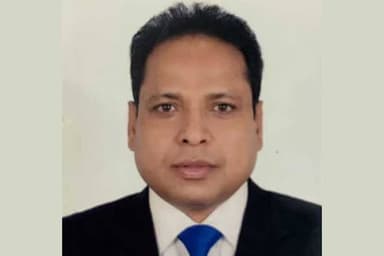
Dr S M Abdullah and Dr Muhammed Shahadat Hossain Siddiquee are associate professor and professor respectively, Department of Economics, University of Dhaka. abdullahsonnet@gmail.com; shahadat.siddiquee@du.ac.bd