


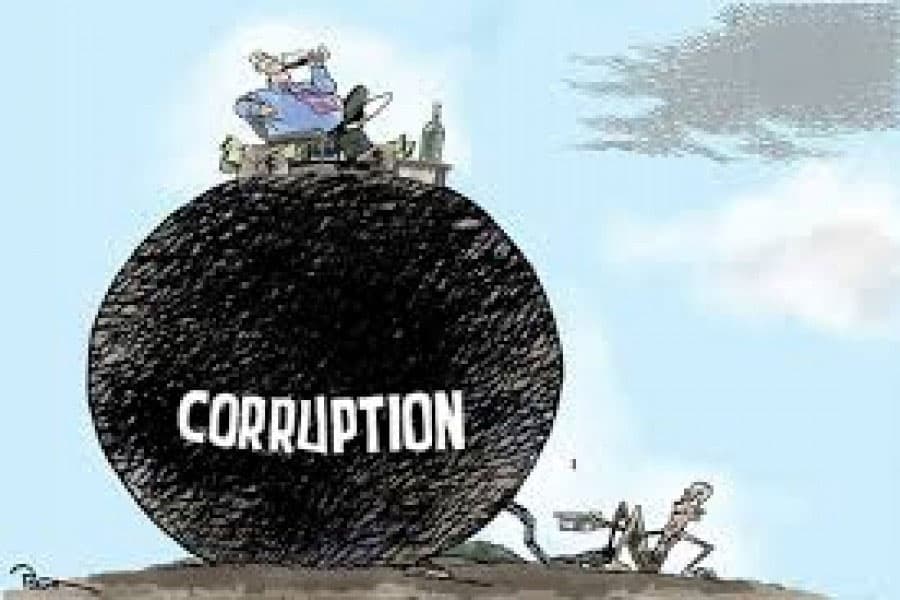
A survey conducted by the Transparency International Bangladesh (TIB) titled 'Corruption in Service Sectors: The National Household Survey 2025' has once again brought to light the alarming prevalence of corruption in the country. The survey gathered households' experiences with 18 public service sectors during the period from November 2024 to October 2025. As this period was within the tenure of the interim government, which largely consisted of technocrats and was led by Nobel Laureate Dr Muhammad Yunus, the findings provide an opportunity to assess corruption trends under this administration. That corruption is widespread, deep-rooted and structurally embedded is hardly a revelation. What is surprising about the TIB report is not the existence of corruption, but the extent to which it appears to have permeated public service sectors under a government that assumed office with the promise of building a new Bangladesh. As per the TIB survey, the prevalence of corruption and bribery in public service sectors worsened during this period compared to the previous survey conducted in 2023.
To put the issue into perspective, it is worth highlighting some of the key findings of the survey. A staggering 81.6 per cent of households that sought services from different government offices in 2025 reported payment of bribes, compared with 70.9 per cent in the 2023 survey. Although the average bribe paid per household fell by 9.8 per cent to Tk 5,124, the overall volume of bribes increased by 15.9 per cent to Tk 126.33 billion, indicating that a larger number of households were affected by corruption during this period. As usual, passport services remained the most corruption-prone sector, with 76.6 per cent of service recipients reporting that they had paid bribes, while the Bangladesh Road Transport Authority (BRTA) ranked second, with 63.5 per cent reporting the same. Similarly, service seekers were routinely coerced into paying bribes by corrupt officials in almost all government offices. Worse still, the very institutions entrusted with combating corruption and upholding justice --- law enforcement agencies and the judiciary --- were themselves found to be tainted by corruption. According to the TIB, households paid the highest average bribes for judicial services. When justice can be bought with money, it undermines public confidence in the government's ability to uphold the rule of law and ensure justice.
That said, it is intriguing that the prevalence of corruption in the public sector increased during the tenure of the interim government, which focused extensively on bringing about reforms in various state institutions. A case in point is the government's decision to scrap the requirement for police verification for passport issuance, which had long been one of the main causes of corruption and harassment in obtaining passports. Apart from police verification, all other processes --- from submitting passport applications to paying fees --- are done digitally. How, then, does corruption still persist? The authorities concerned must investigate and take necessary measures.
One of the main reasons governmental measures fail to make a dent in corruption is the existence of syndicates operating within various government offices. They systematically obstruct and foil any meaningful reform. This was evident during the tenure of the interim government, when efforts to reform the bureaucracy, the NBR, as well as the operations of Chittagong Port, were stalled from within by those who have a vested interest in maintaining the status quo. So, as long as such syndicates remain in positions of power, no party that has ever been in office can escape the taint of corruption. Of late, the finance minister has said that increasing the salaries of government employees could help reduce corruption by easing financial pressures on public servants. However, past experience does not attest to this assumption. Corruption is rooted in the mindset of a section of government officials. They believe it is their right to abuse power in one way or another. The government must therefore devise an effective mechanism to hold government officials accountable in order to bring corruption to an end, or at least reduce it drastically.